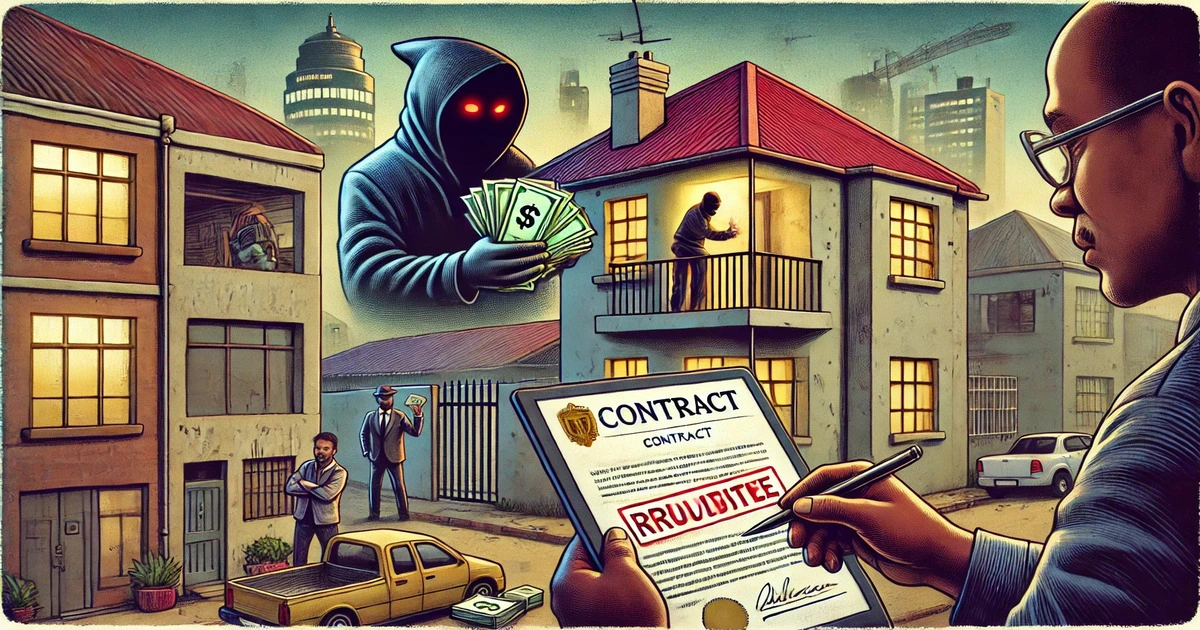
Can I Evict My Tenant Without a Tenancy Agreement in South Africa?
In South Africa, informal rental arrangements are standard, particularly in family- or friend-based property rentals. But when disputes arise, landlords often ask, “Can I evict my tenant if I do not have a tenancy agreement in South Africa?”
The short answer is yes but the process is more complex, and you’ll need to rely on other legal tools and evidence. This article provides an in-depth guide to your rights, legal processes, and practical tips for removing a tenant without a written lease.
Understanding the Legal Framework
Even if there is no written lease, a verbal or implied lease can still exist. South African tenancy law recognises both written and oral agreements under the common law and the Rental Housing Act 50 of 1999.
The key phrase: “Can I evict my tenant if I do not have a tenancy agreement in South Africa?” is answered by recognising that tenants are still protected by law, even without written documentation. As a landlord, you cannot simply change the locks or remove a tenant without a court order, even if no lease was signed.
What Counts as a Lease Agreement Without a Written Contract?
In the absence of a written lease, an oral lease or tacit agreement (an agreement implied by conduct) may still be enforceable.
For example, if:
- You allowed someone to move into your property.
- They have been paying rent regularly.
- You both understood this to be a landlord-tenant relationship.
Then a lease likely exists in the eyes of the law, even if it’s unwritten.
The court may rely on proof such as bank deposits, WhatsApp messages, email exchanges, or witness testimony to confirm the existence of a lease.
So, can I evict my tenant if I do not have a tenancy agreement in South Africa? Yes, but you must still treat the situation as if a lease exists and follow the legal eviction process.
Why a Written Lease is Important
Although it is possible to evict a tenant without a tenancy agreement, having a written lease makes the process more transparent and faster. A written agreement defines:
- The rent amount
- The lease duration
- Notice periods
- Rules on maintenance and subletting
Without these, your case may rely heavily on circumstantial evidence, which a tenant can easily challenge or deny.
However, even in the absence of documentation, your rights are not erased. This reinforces the answer to “Can I evict my tenant if I do not have a tenancy agreement in South Africa?”—yes, through the courts.
What Law Governs Evictions Without a Lease?
The Prevention of Illegal Eviction from and Unlawful Occupation of Land Act (PIE Act), No. 19 of 1998, is the main law governing eviction. It protects all occupants of land and property, especially in residential settings, regardless of whether they have a lease.
According to PIE:
- You must obtain a court order to evict any occupant.
- A notice of eviction must be served at least 14 days before the hearing.
- The rights of vulnerable persons (elderly, children, disabled individuals) must be considered by the court.
- The eviction must be just and equitable under the circumstances.
Thus, the PIE Act protects tenants, whether they have a lease or not. You can evict, but only with due process.
Steps to Evict a Tenant Without a Tenancy Agreement in South Africa
If you’re asking, “Can I evict my tenant if I do not have a tenancy agreement in South Africa?”, here is a step-by-step overview of what you need to do:
Step 1: Attempt to Resolve the Dispute Informally
Try to speak with your tenant and request that they vacate the premises as soon as possible. Record your attempts in writing. If they agree, confirm the move-out date in a written message or email.
Step 2: Serve a Formal Notice to Vacate
Even without a lease, it’s reasonable to give the tenant at least 30 days’ written notice to vacate the property. This demonstrates to the court that you acted reasonably.
If they refuse to leave after notice, proceed to court.
Step 3: Apply to the Magistrate’s Court for an Eviction Order
You must file an application for eviction at the court in the jurisdiction where the property is located. Your application must include:
- An affidavit detailing your relationship with the tenant
- Evidence of unpaid rent or breach of verbal terms
- Proof of notice to vacate
The court will then issue a Section 4(2) notice (as per the PIE Act), which must be served on the tenant and the municipality by the Sheriff at least 14 days before the court hearing.
Step 4: Court Hearing and Order
At the hearing, you must prove:
- You are the rightful property owner or legal landlord
- The tenant is unlawfully occupying the property
- You gave reasonable notice
- It is equitable to evict them
If the court is satisfied, it will issue an eviction order specifying a date by which the tenant must vacate the premises.
Step 5: Enforce the Order via the Sheriff
If the tenant still refuses to vacate, the Sheriff of the Court will be authorised to remove them and their possessions physically.
What Evidence Can Support Your Case Without a Lease?
When asking, “Can I evict my tenant if I do not have a tenancy agreement in South Africa?”, understand that evidence will be vital. The following can support your case:
- WhatsApp or SMS messages confirming rental terms
- Bank statements showing rent payments
- Eyewitness accounts (e.g., neighbours)
- Emails about move-in arrangements
- Proof of property ownership (title deed)
This type of evidence can help the court establish the existence of an oral lease or prove unlawful occupation.
How Long Does the Eviction Process Take?
The eviction process in South Africa generally takes 8 to 16 weeks, depending on the court’s availability and whether the tenant contests the eviction.
Cases without a lease can take slightly longer, as the court may scrutinise the relationship more carefully before granting an eviction order.
This confirms again that while the answer to “Can I evict my tenant if I do not have a tenancy agreement in South Africa?” is yes, the process is neither quick nor automatic.
Risks of Self-Help Evictions
Many landlords become frustrated and are tempted to take matters into their own hands. This includes:
- Changing locks
- Removing the tenant’s belongings
- Cutting off electricity or water
Do not do this. These actions are illegal under the PIE Act and can lead to criminal charges, fines, or the reinstatement of the tenant.
You must go through the courts, even if there is no lease. The answer to “Can I evict my tenant if I do not have a tenancy agreement in South Africa?” is still bound by lawful procedure.
Tips for Landlords Without a Lease
If you have a tenant and no lease agreement:
- Immediately document all relevant information, including rental terms, payments, complaints, and requests.
- Keep copies of bank statements, emails, and text messages for your records.
- Avoid verbal agreements in future—insist on a written lease.
- Serve written notice if the tenant breaches the agreement or fails to make rent payments.
- Consult an attorney who specialises in landlord-tenant disputes.
Conclusion: Can I Evict My Tenant If I Do Not Have a Tenancy Agreement in South Africa?
Yes, you can. The law recognises that informal leases exist, and the absence of a written agreement does not remove your rights as a landlord. However, eviction without a lease requires that you:
- Follow the PIE Act process.
- Obtain a court order, and
- Provide evidence of unlawful occupation.
Landlords who follow the proper process can regain possession of their property, even if there is no signed lease. So, when asking “Can I evict my tenant if I do not have a tenancy agreement in South Africa?”, the answer is yes—but only through the courts and with patience, preparation, and proof.
FAQs
Can I remove a tenant without a lease and without going to court?
No. The PIE Act requires a court order for all residential evictions, regardless of whether a lease exists.
What if my tenant never paid rent? Can I still evict them?
Yes. Non-payment strengthens your case. But you still need to apply to court and follow the legal process.
How do I prove a verbal lease if it was not in writing?
Use proof such as messages, bank transfers, and witness testimony to show the tenant agreed to live in the property and pay rent.
What if the tenant claims I promised them permanent residence?
This is why written leases are crucial. If challenged, the court will assess all available evidence to determine what was agreed upon.
Can I evict family or friends who live on my property rent-free?
Yes, even if no rent is paid. If the person refuses to leave, they are considered an unlawful occupant, and you can apply for an eviction order under the PIE Act.
Useful External Links
Membership with the South African Landlords Association provides access to expert advice, legal resources, and a community of like-minded professionals.
Enhance your rental management experience and protect your investments by joining today!
Our Top Read Blogs:
Disclaimer:
This post is for general use only and is not intended to offer legal, tax, or investment advice; it may be out of date, incorrect, or maybe a guest post. You are required to seek legal advice from a solicitor before acting on anything written hereinabove.